Photographs don’t just capture faces—they preserve moments of diplomacy, cultural exchange, and the subtle evolution of international relationships. When it comes to the British monarchy’s presence in the United States, every image tells a layered story: of protocol and warmth, tradition and adaptation, soft power in motion.
As King Charles III embarks on a state visit to the U.S., the spotlight returns to decades of royal appearances on American soil. These moments, frozen in time, reveal how the monarchy has navigated one of its most complex yet essential alliances—the transatlantic bond with a nation that once broke from the Crown.
This visual journey traces royal visits through history, spotlighting key figures, pivotal events, and the photography that made them unforgettable.
The First Wartime Visit: King George VI and the Power of Symbolism
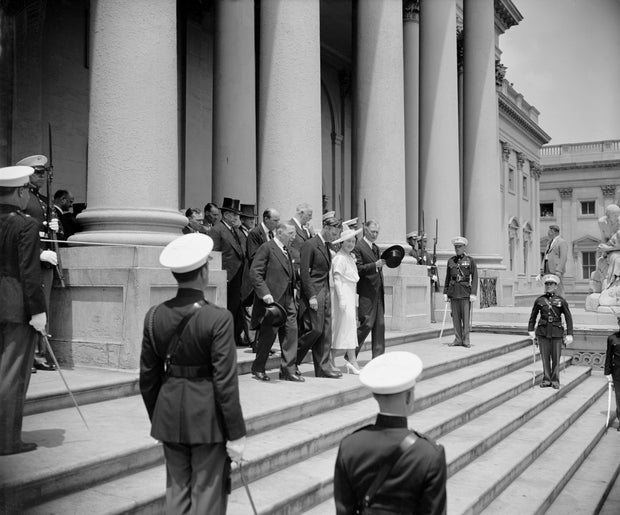
In June 1939, King George VI and Queen Elizabeth—the future Queen Mother—stepped onto American soil, becoming the first reigning British monarchs to visit the United States. Their arrival in Washington, D.C., was more than ceremonial. It came at a moment of global tension, with war clouds gathering over Europe.
Photographs from that trip radiate calculated warmth. One iconic image shows the King and President Franklin D. Roosevelt sharing a casual meal at the White House, the two leaders grinning over hot dogs at a picnic—a deliberate, relatable gesture orchestrated by Roosevelt to humanize the monarchy for American audiences.
These photos weren't just diplomatic snapshots—they were political tools. At a time when the U.S. was officially neutral but quietly sympathetic to Britain, the visit soft-pedaled class divides and emphasized shared values. The royal couple visited New York, Chicago, and even Niagara Falls, where they stood wrapped in raincoats, gazing into the mist—a moment captured in grainy black-and-white that still resonates.
The trip’s photographic record helped shift public opinion. Gallup polls showed support for aiding Britain surged after the visit. In essence, the camera helped win a battle before the war even began.
Queen Elizabeth II: The Monarch Who Knew America
If George VI opened the door, Queen Elizabeth II walked through it—repeatedly. Over her 70-year reign, she visited the U.S. 26 times, each trip marked by media attention and photographic milestones.
Her first state visit in 1957, just five years into her reign, was a coming-out party on a global scale. Photographs from that trip show a young queen in a pale blue gown addressing a joint session of Congress—a rare honor—her posture poised, her gaze steady. The image became a symbol of youthful authority and modern monarchy.
Later visits offered different visual narratives. In 1976, during the U.S. bicentennial, Elizabeth arrived in a horse-drawn carriage to fireworks and fanfare. A photograph of her laughing beside President Gerald Ford at a White House dinner captured a rare informal moment, reinforcing her adaptability.
:max_bytes(150000):strip_icc():focal(728x275:730x277)/princess-catherine-prince-william-donald-trump-king-charles-iii-trump-state-visit-uk-windsor-091725-8672599a27214b6f8ffdbb07fd7596e4.jpg)
By 2007, her ninth decade, the images had shifted again. Photos from her visit to Jamestown and Williamsburg emphasized historical continuity, with the Queen in a lime-green coat and matching hat, standing before colonial-era buildings. The message: Britain and America may have diverged, but their roots remain intertwined.
Each photograph chronicled a phase—not just of her life, but of the evolving U.S.-UK relationship, from postwar partnership to Cold War allyship to 21st-century cooperation.
Prince Charles Before the Crown: A Familiar Face in America
Long before he became king, Charles was the royal most frequently seen in the U.S. From the 1970s onward, he made private and official trips, often promoting environmental causes, architecture, and his charitable foundations.
Photos of Charles in the U.S. during this era paint a complex portrait: a man caught between duty and personal life. Images from the 1980s show him smiling beside President Reagan, yet others—like the infamous 1995 photo with Camilla Parker Bowles at a polo match—hinted at the private turmoil that would dominate headlines.
But Charles also used photography to his advantage. In 2011, during a visit promoting his Prince’s Foundation, he was photographed planting a tree in Central Park. The image, widely shared, framed him as a forward-thinking environmentalist—a deliberate contrast to the caricature of an out-of-touch aristocrat.
By the time he ascended the throne, Americans had seen decades of Charles in various roles: heir, husband, father, activist. The photos built a sense of familiarity—sometimes sympathetic, sometimes scrutinized—that few monarchs achieve before coronation.
The Sussex Effect: Modern Royalty and the Digital Spotlight
No recent royal visits to the U.S. have drawn more photographic attention than those of Prince Harry and Meghan Markle—especially after their stepping back from royal duties.
Their 2021 arrival in California was captured not by official photographers, but by paparazzi and social media. Grainy shots of Harry holding their son, Archie, at LAX, or Meghan smiling cautiously at a charity event, fueled a new kind of royal imagery: one marked by privacy struggles, media tension, and public empathy.
Unlike past royal visits, which were tightly controlled, the Sussexes’ U.S. appearances unfolded in real time across Instagram, Twitter, and tabloids. A photo of Harry in a wheelchair at the Invictus Games in 2023—smiling as wounded veterans competed—became a powerful counter-narrative to negative press.
These images underscore a shift: royal influence is no longer just about state dinners and official portraits. It’s about authenticity, accessibility, and the ability to control—or reclaim—one’s visual narrative in the digital age.
King Charles III’s State Visit: Legacy in the Lens
Now, as King Charles III undertakes a state visit to the U.S., the photographic stakes are higher than ever. This isn’t just a diplomatic formality—it’s a moment of redefinition.
Early images from the trip show Charles in familiar terrain: shaking hands with the President, inspecting military honors, attending a glittering state dinner. But the details matter. A photo of him adjusting his glasses while reading a speech, or laughing with First Lady Jill Biden, communicates approachability.

What sets this visit apart is its deliberate historical resonance. The itinerary includes nods to past royal trips—revisiting locations tied to George VI and Elizabeth II, engaging with veterans, and highlighting climate initiatives, a cause central to Charles’s identity.
Photographers will be watching for symbolism: Does he stand where his father stood in 1939? Does he echo his mother’s gestures? Each frame will be parsed, shared, and interpreted.
For the British monarchy, this visit is about continuity and renewal. For photojournalists, it’s a rare chance to document leadership in transition—where every smile, posture, and handshake feeds the global perception of the Crown.
What Makes a Royal Photo Iconic?
Not all royal photographs endure. The ones that do share common traits:
- Emotional authenticity: A genuine laugh, a quiet moment of reflection.
- Historical weight: Tied to a larger event or turning point.
- Relatability: Humanizing figures often seen as distant.
- Compositional strength: Lighting, framing, and context align.
Consider the 1939 hot dog photo: informal, slightly awkward, but rich with meaning. Or Queen Elizabeth at the 2014 D-Day anniversary, her hand gently resting on a veteran’s shoulder—silent, dignified, unforgettable.
In the age of digital saturation, the challenge for royal photographers is not just capturing the moment, but distilling its essence in a way that cuts through the noise.
Behind the Camera: The Role of Royal Photographers
Official royal visits involve coordinated media access, but the best images often come from split-second decisions. Photographers like Arthur Edwards (The Sun) or Tim Graham (historic royal archive) have spent careers anticipating gestures, expressions, and angles.
Modern coverage is more decentralized. While AP and Reuters document official events, smartphone footage and social media posts now compete with traditional outlets. A single candid—like Charles hugging a child at a community center—can go viral in minutes.
For aspiring photojournalists, royal visits offer a masterclass in patience and timing. Know the protocol, anticipate the pauses, and always be ready for the unplanned moment. That’s where history happens.
The Legacy in Every Frame
Royal visits to the U.S. have never been just about diplomacy. They’re performances of relationship, carefully staged yet deeply human. The photographs that survive do so because they capture something real beneath the regalia.
As King Charles III walks the same halls as his parents and grandparents, the camera watches—not just for what he does, but what it means. Each image adds a thread to the fabric of Anglo-American history.
For historians, these photos are archives. For journalists, they’re storytelling tools. For the public, they’re moments of connection—proof that even the most distant figures breathe, smile, and sometimes eat hot dogs on the lawn.
The next time you see a photo of the King in Washington, look beyond the uniform and the crown. Look for the story in his eyes, the weight in his handshake, the legacy in his shadow.
Watch the details. That’s where history lives.
Frequently Asked Questions
Why are royal visits to the U.S. photographed so extensively? Royal visits blend diplomacy, media spectacle, and public interest. The images serve both historical documentation and public relations, reinforcing the U.S.-UK alliance.
How many times did Queen Elizabeth II visit the United States? She made 26 official visits to the U.S. during her reign, starting in 1957 and continuing through 2011.
Did King George VI really eat hot dogs at the White House? Yes—in 1939, he joined President Roosevelt for a picnic where hot dogs were served. The moment was staged to appear casual and was widely photographed.
What was significant about King Charles III’s 2023 U.S. state visit? It reaffirmed transatlantic ties, honored WWII veterans, and highlighted climate change—reflecting Charles’s personal priorities as monarch.
How do royal photographers get access to private moments? Official photographers are embedded with royal tours, but candid shots often come from public events or brief, unscripted interactions during official itineraries.
Are royal visit photos staged? Many are coordinated for maximum impact, but skilled photographers capture authentic expressions within structured events.
What role does photography play in modern monarchy? It humanizes the royal family, shapes public perception, and preserves legacy—one frame at a time.
FAQ
What should you look for in Royal Moments: British Monarchs in America Through Photos? Focus on relevance, practical value, and how well the solution matches real user intent.
Is Royal Moments: British Monarchs in America Through Photos suitable for beginners? That depends on the workflow, but a clear step-by-step approach usually makes it easier to start.
How do you compare options around Royal Moments: British Monarchs in America Through Photos? Compare features, trust signals, limitations, pricing, and ease of implementation.
What mistakes should you avoid? Avoid generic choices, weak validation, and decisions based only on marketing claims.
What is the next best step? Shortlist the most relevant options, validate them quickly, and refine from real-world results.